Foreclosure: Keep Your Home
Facing Foreclosure? Understand Your Options Before You Decide.
My free eBook, How to Avoid Foreclosure in California, introduces the options for catching up on payments, keeping your home, and protecting your equity.
Start with your deadline, then work through the choices that fit your situation.
Download the free guide to prepare your questions and next steps. There is no obligation to list or sell your home.
Get the Free eBook
Use the guide to prepare your next conversation
Understand the process. Learn what foreclosure notices mean and which dates to confirm with your mortgage servicer and trustee.
Explore ways to keep your home. Review payment arrangements, loan modifications, and other possibilities to discuss with your servicer or a HUD-approved housing counselor.
Protect your remaining equity. If keeping the home is not feasible, compare the available options before deciding whether to sell. I can help you estimate market value and potential sale proceeds.
By submitting, you agree that Ed Robinson may contact you about this guide and your real estate needs. No obligation to list or sell. Close form
1. Confirm Your Deadline
Contact your mortgage servicer promptly about options for keeping the home. If an auction is scheduled, confirm its current date directly with the trustee. Gather your notices, recent loan statements, and correspondence. Do not rely on an old sale date or an expected postponement.
California Foreclosure Timeline
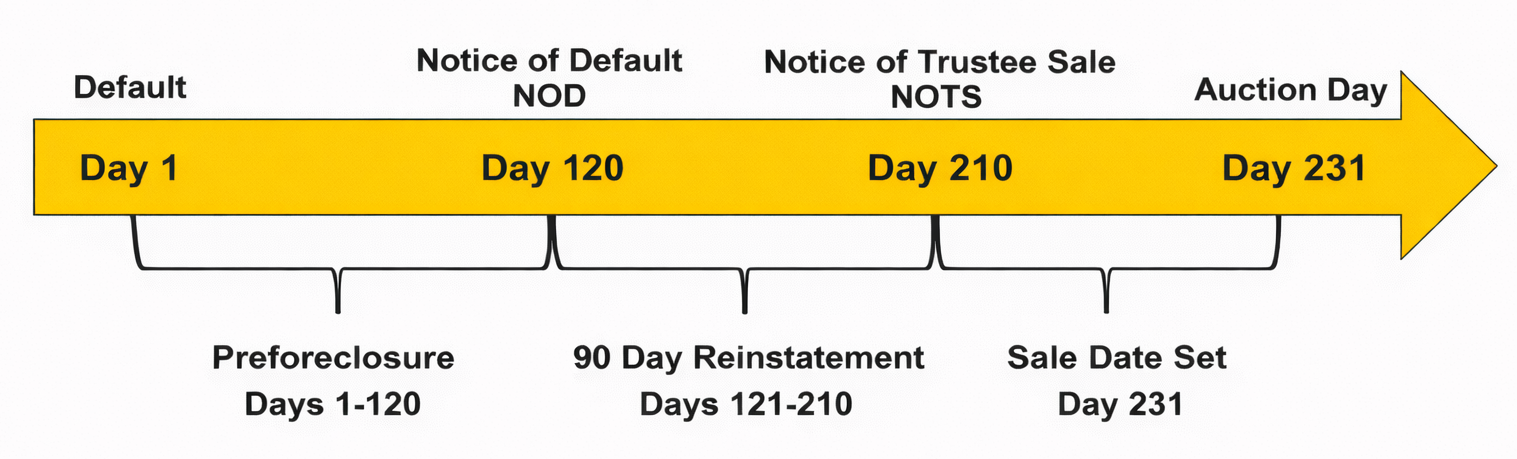
Swipe left or right to read the timeline. Tap it to open the full-size image.
1. Missed payments Contact your servicer about assistance before the situation escalates.
2. Notice of Default The recorded notice starts the formal nonjudicial foreclosure process.
3. Notice of Trustee Sale The notice identifies a scheduled auction. Verify the current date with the trustee.
4. Trustee’s sale The auction may proceed unless it is postponed or stopped through an applicable process. Selling before the foreclosure auction may bring a higher price because you can reach homebuyers as well as investors looking for discounted properties.
What These Dates Mean for You
Your actual notices and verified deadlines control. This shows the sequence, not a guaranteed number of days. Reinstatement may remain available after the sale notice; confirm the amount and deadline promptly.
Timing varies. For most covered mortgages, foreclosure generally cannot begin until the loan is more than 120 days delinquent. California’s sale-notice stage generally follows three months after the NOD, with a limited early-recording exception; the earliest sale is three months and 20 days after the NOD.
Reinstatement can remain available after the NTS. The statutory right generally ends five business days before the scheduled sale, subject to postponement rules. Confirm your current sale date, reinstatement amount, and deadline with the trustee and independent counsel.
California Civil Code §§ 2924, 2924c and 2924f · Federal timing guidance
2. Options for Keeping Your Home
3. If You Cannot Keep Your Home
Before deciding whether to sell, estimate your equity and compare the available sale options.
Understand What Equity May Remain
Missed payments do not tell you what your home is worth. Start with its current market value and subtract the total debt secured against it.
Suppose your home is worth $800,000 and you owe $500,000 on the mortgage and other liens. That leaves $300,000 before selling costs and any other amounts you must pay at closing. The amount you actually receive would be lower.
Which options you can use depends on what you owe, what you can afford, who has a lien on the home, and how much time remains before the sale. Ask your mortgage company or attorney which options are available to you.
4. Watch for Foreclosure Assistance Scams
5. Find Independent Help
HUD-participating agencies provide foreclosure counseling free of charge. You can use these resources without hiring me or agreeing to sell.
Frequently Asked Questions
Can I sell after a foreclosure notice, and will listing stop the auction?
Yes, a sale may still be possible. If your home is listed or you receive an offer, I can contact your lender to request that the auction be postponed so the sale can close. The lender must agree, and we need confirmation of the postponement. Confirm the current auction date with the trustee and check how much you owe and how long closing will take.
How much money would I actually receive if I sell?
Ask for an estimated seller net sheet, rather than looking only at the sale price. It should account for current loan payoffs, other liens, accrued charges, commissions, escrow and title charges, and other applicable costs. For example, $800,000 less $580,000 in payoffs and $40,000 in selling costs leaves an estimated $180,000 before any other adjustments or taxes.
What if I owe more than the home is worth?
A conventional sale may not produce enough to satisfy all secured debts and selling costs. A short sale requires necessary creditor approvals and may take time. Ask the servicer about available alternatives, and obtain independent legal and tax advice before accepting terms that affect unpaid debt.
Do I need repairs or a cash buyer to sell in time?
Neither is automatically required. Compare a traditional residential sale in the home’s current condition with a cash offer using net proceeds, contingencies, proof of funds, and the verified closing deadline. Before paying for repairs or cleanout, weigh the likely benefit against cost and delay. An as-is sale still carries applicable disclosure duties.
How do I know who a buyer or agent represents?
Ask each participant to explain their role, compensation, and any relationship with the proposed buyer. A cash buyer purchasing for its own account has different interests from an agent representing you as the seller. Review the agency disclosures and written agreements before signing, and seek independent advice if a role or financial interest is unclear.
Does an auction automatically eliminate all my equity?
No. Surplus proceeds may remain after applicable debts and costs, subject to lien priorities and distribution requirements. That does not guarantee the same outcome as a voluntary sale. Obtain qualified advice about remaining rights or proceeds.
Start With the Numbers
I can help you estimate market value and potential sale proceeds before you decide whether to sell. There is no obligation to list your home.
Request a Free Equity AnalysisPrefer email? edrobinson@partner.realestate
619-213-7483